
Anatomy of a Viral Product Video
Plus its secret sauce.

The most valuable product video of all time is perhaps Cognition AI's demo of Devin (Devin, the first AI software engineer). It went viral immediately. Within a month, Cognition AI's valuation increased from $350M to $2B. As of 2025/02, the demo has received more than 1.1 million views.
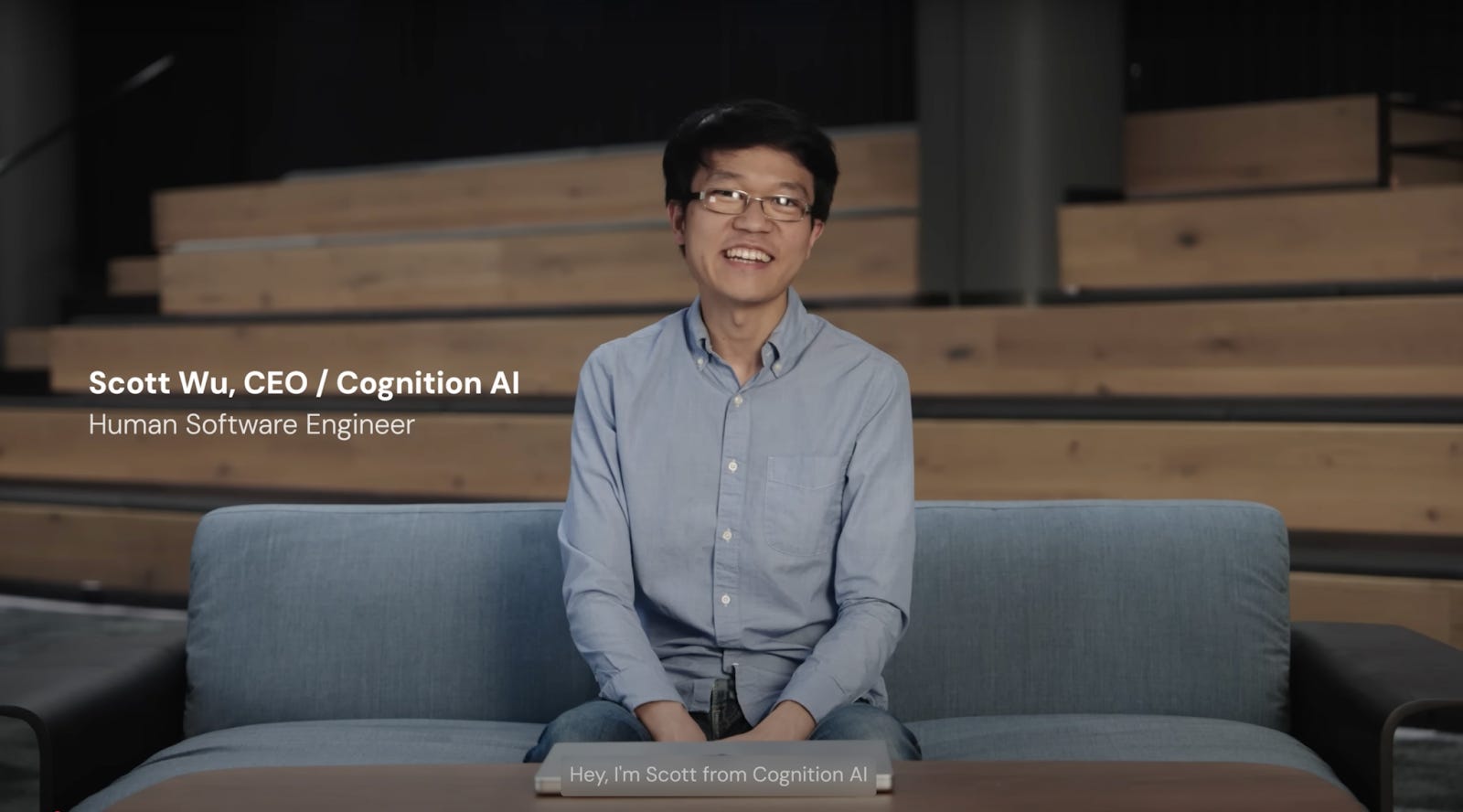
But there is a twist: Devin was debunked weeks after its debut, which makes the case even more interesting:
What makes a product video go viral?
Why does a "faking-it" product feel credible?
The Viral Recipe
This demo of Devin provides a textbook recipe. It has three parts plus one secret sauce:
The hook
The look
The trust
+ the secret sauce (see last point)
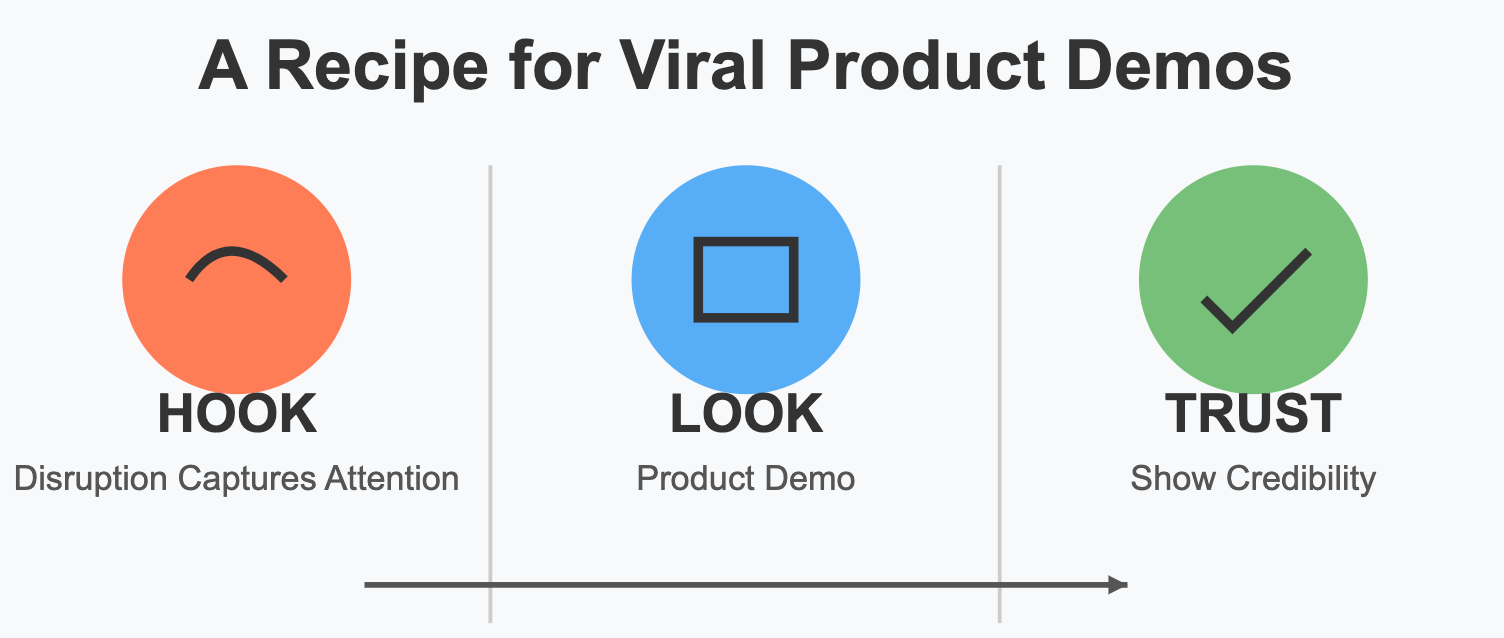
(1) The hook--disruptive technology
My friend Dana Kanze has an HBR article showing that startups that seek to "disrupt" attract more funding and talent than those that seek to "build." Here, a disruption technology serves as the hook to capture attention.
The demo starts with "Introducing Devin, the world's first AI engineer..."-- It arouses feelings of excitement, curiosity, or even fear--Are software engineers going to be replaced by AI? So viewers click on to see the answer.
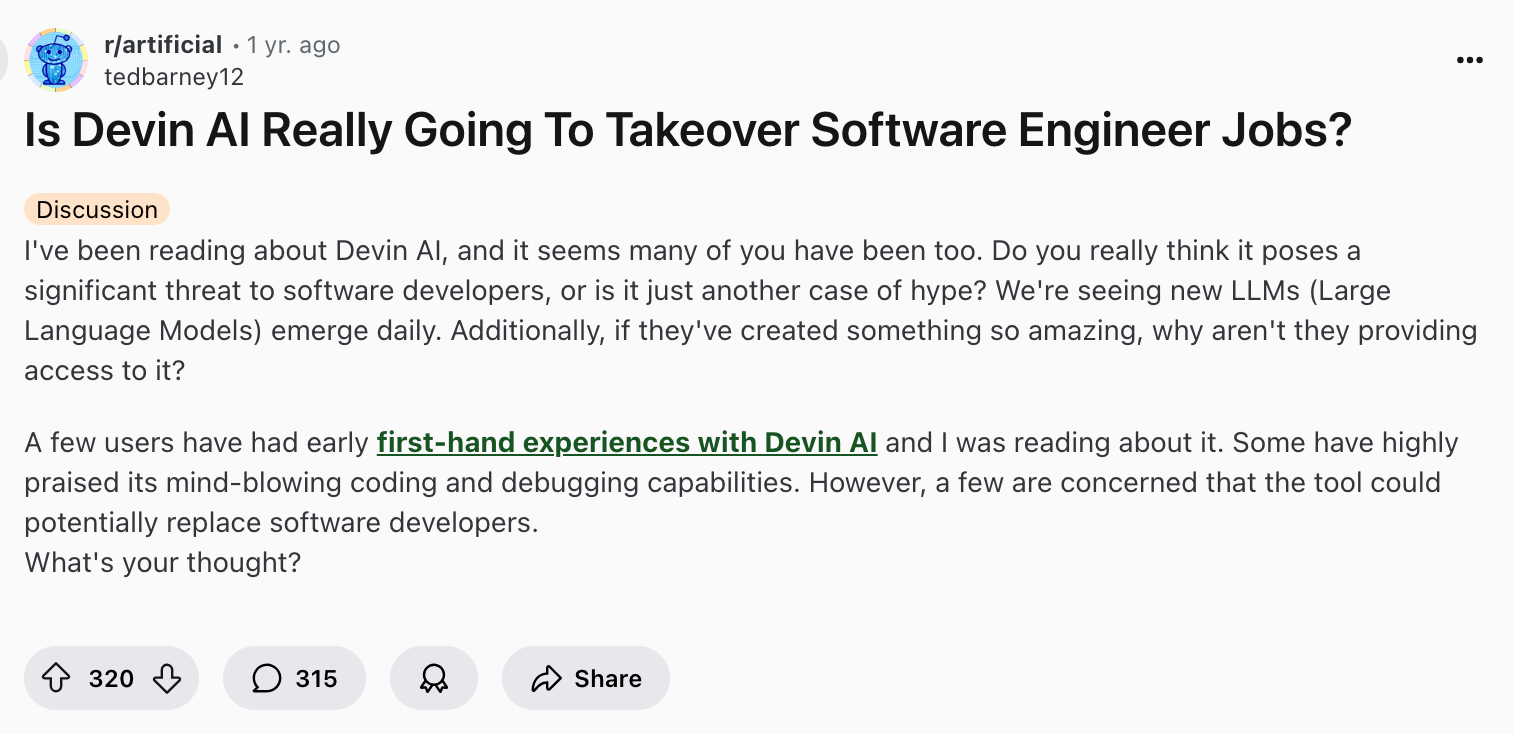
The Devin team also had another (now debunked) video showing Devin complete an Upwork task. This is a genius move to reinforce the "disruptive" narrative. The vision--AI doing economically valuable work--would later become Microsoft & OpenAI's definition of AGI ("a system generating $100 billion in profits") 10 months later.
The most common fail mode at the hook stage is to introduce the product as "we build this thing, and we beg you, pls check it out." This is not a hook. A hook should effectively address viewers' question:
"Why should I care?"
(2) The look--show how it works
This step is straightforward: address the hook."What does the first AI software engineer look like?" The Devin demo shows that it can browse the web, debug its code, perform analysis, and even create a website—just like a human software engineer.
Most common fail modes:
Fail Mode 1: The demo fails to address the hook. For instance, this Gemini demo has a great hook: "You can build your next AI App with Gemini, for free, in less than 90 seconds..." However, after 90 seconds, it only shows how to get an API key and make a boilerplate API call to Gemini. This is underwhelming, and viewers feel cheated.
Fail Mode 2: The demo looks like a tutorial, not a demo. A tutorial boringly walks through the product step-by-step. In contrast, the demo should only show the highlight of the product—what makes the product "click"? Jump directly there. For instance, the Devin demo only shows Devin in action, skipping the boring parts like setting it up, authenticating, etc.
Fail Mode 3: The demo becomes too abstract and doesn't show how the product actually works. It might use fluffy words like "smart," "deep," "democratize," "revolutionize," or "reimagined," followed by customers saying this is so good, but the product itself is not shown. It leaves the viewers with a positive vibe but no concrete idea of the product. (an example: agentforce)
(3) The trust--build credibility
If it looks too good to be true, how does the team build their credibility?
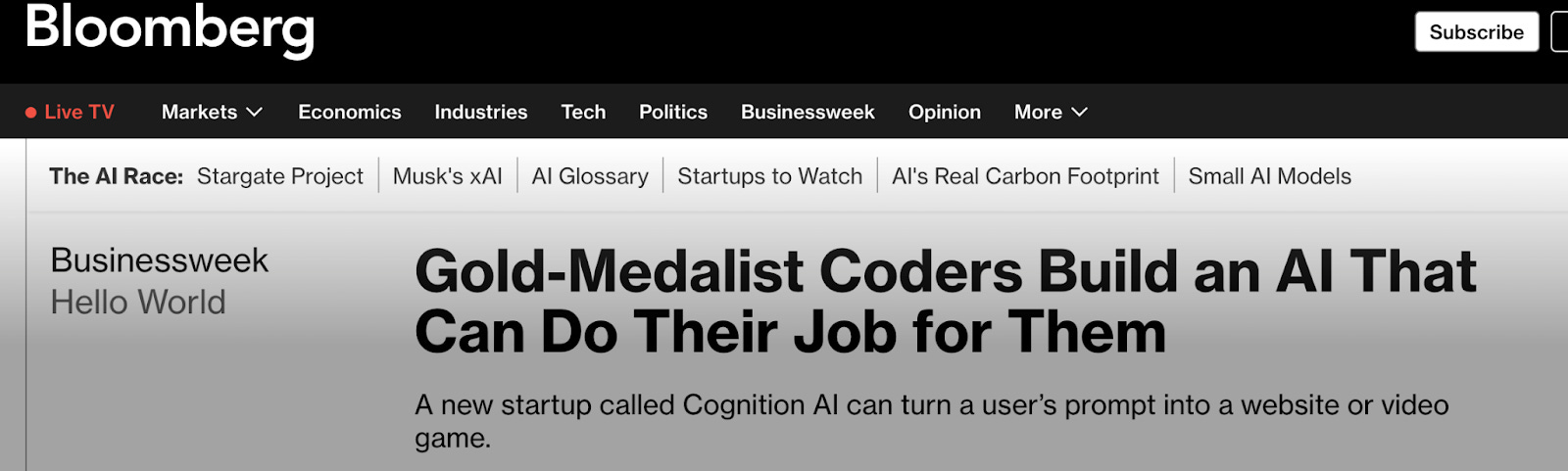
Build trust through credentials: The Devin Team introduced their founding team having 10 IOI gold medals.

The gold medal is captured by Bloomberg as the headline.
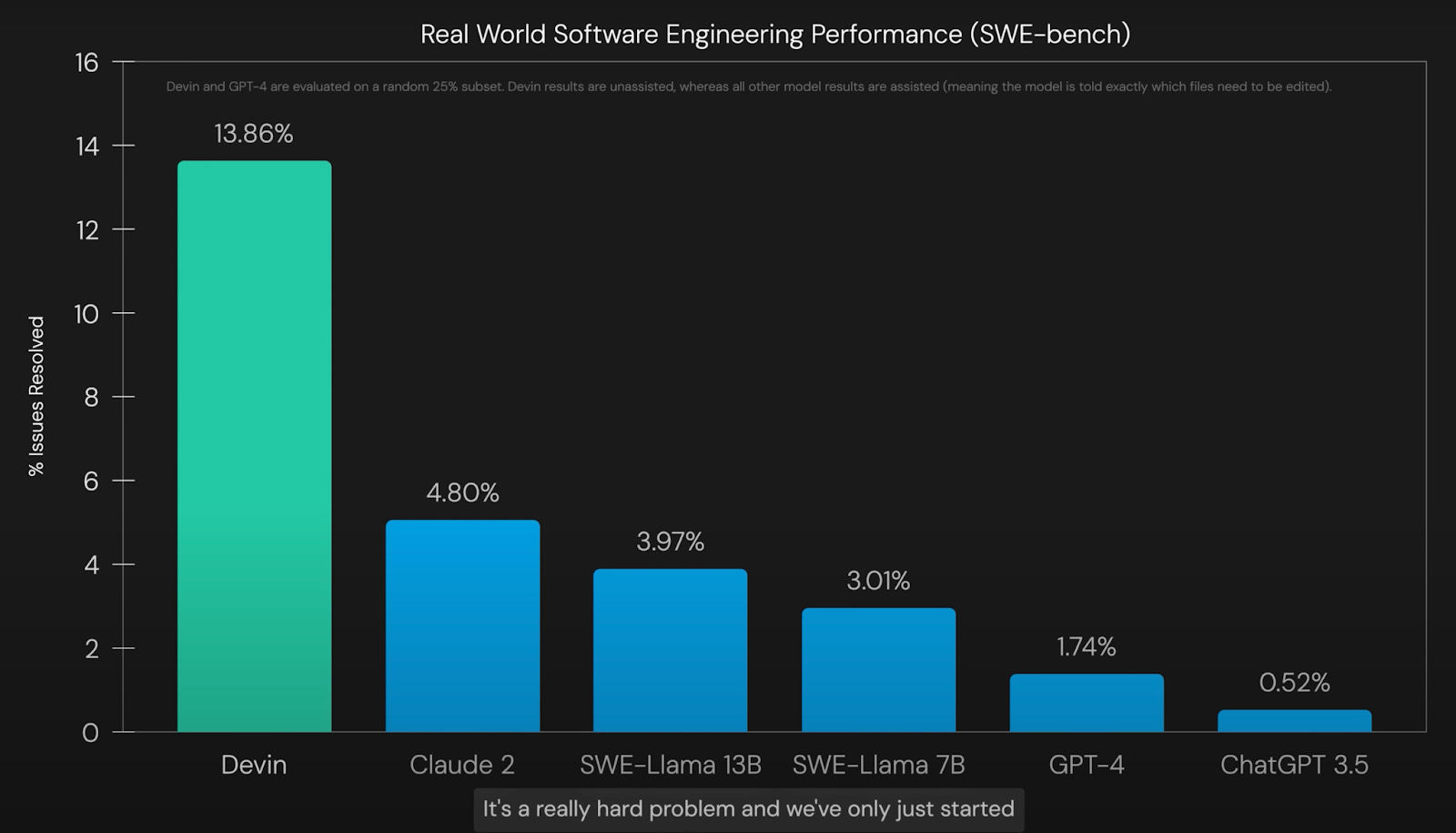
Build trust through benchmarks: The demo also shows how Devin performs on SWE-bench. Benchmarks are the most common way to build trust, especially for new LLMs.
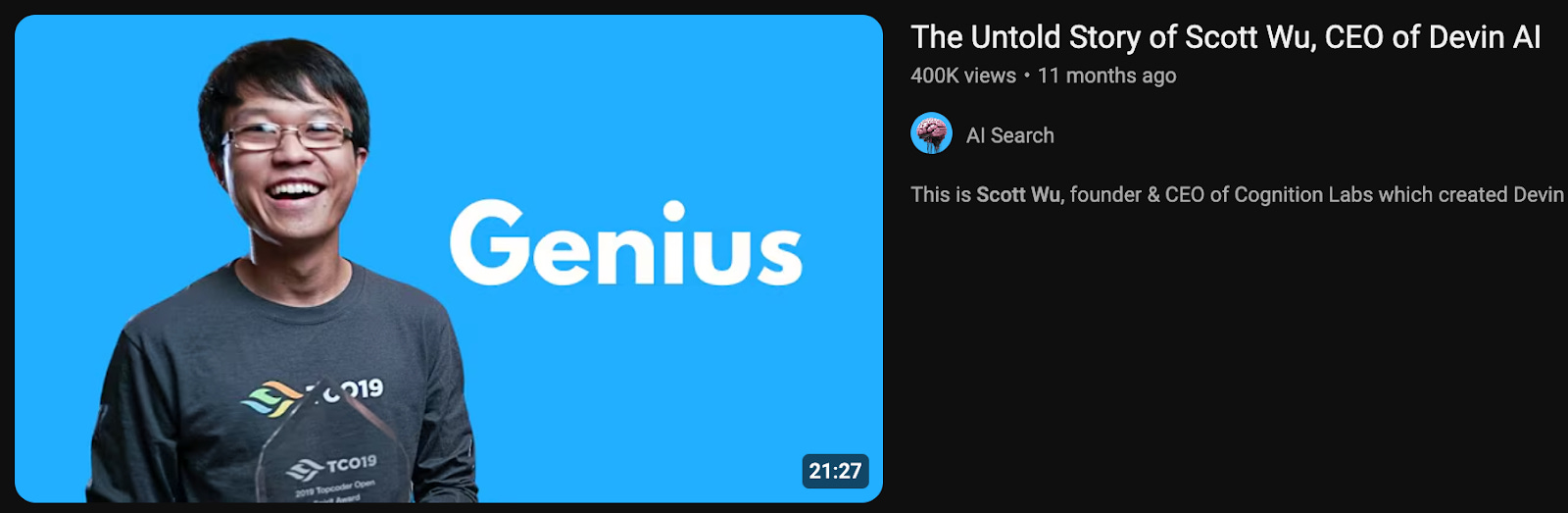
Build trust through non-verbal cues. Scott Wu appears uneasy in front of a camera. Research has shown that people who are easily embarrassed are trusted more.
Another non-verbal cue is his deep, rich voice. He sounds confident. The uneasy look mixed with the confident voice creates chemistry, making me believe they've built this amazing product and they have overcome social awkwardness to ship it to the world.
The Template of a Silicon Valley Story -- "Young genius changes the world"
Why does a 'faking-it' product feel credible? Because the story—"young genius changes the world"—is one we're culturally primed to believe.
"Young genius changes the world" Story Template
[ ] A brilliant, often socially awkward founder
[ ] Who identifies a massive problem/opportunity
[ ] Creates a revolutionary technology
The secret sauce - reaching the tipping point with the help of investors and AI influencers
By now, the video is "viral-worthy." The real kicker is the folks who get the word out. Who are they?
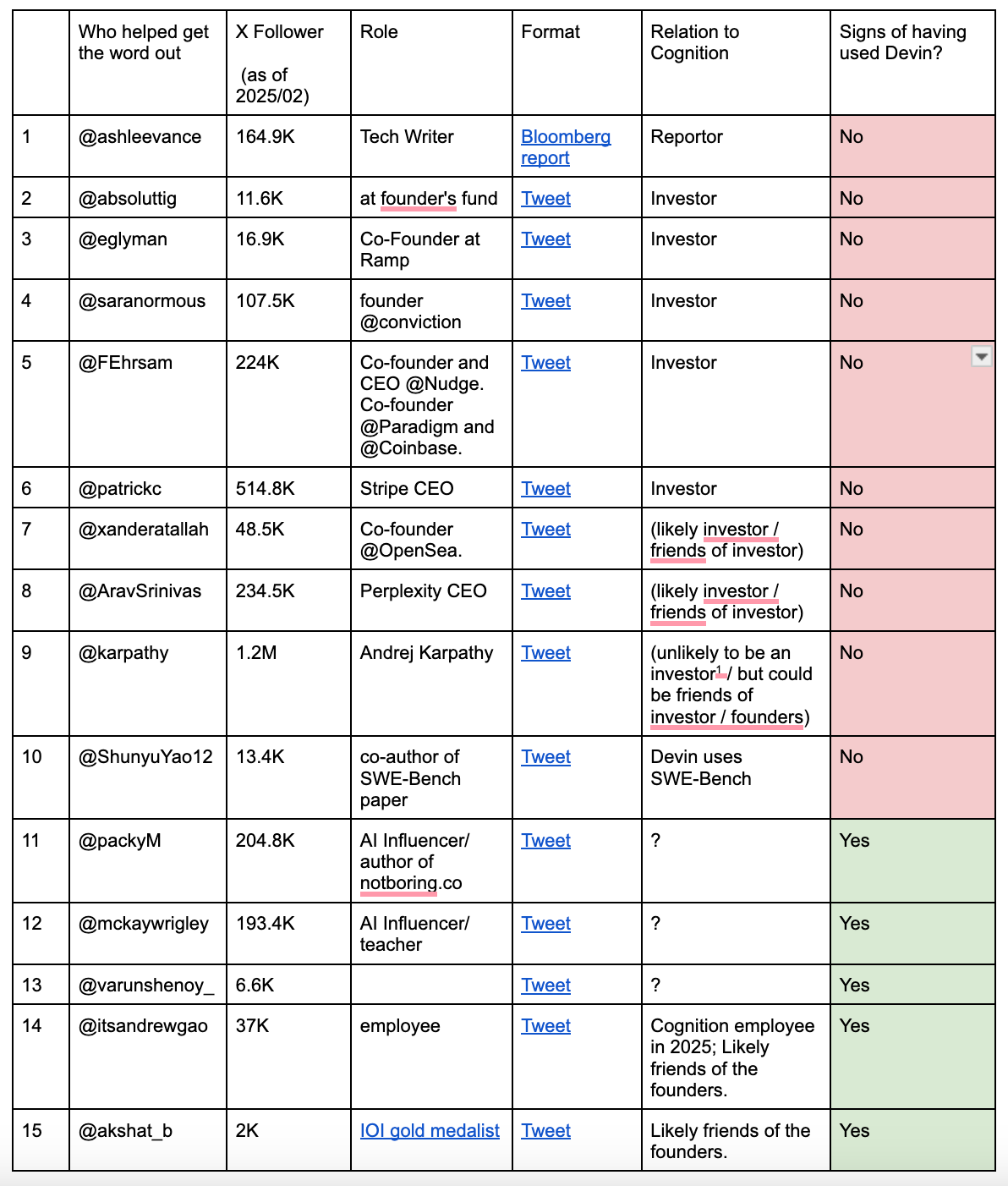
I checked all the endorsing tweets that Cognition reposted on their demo day (2024/03/12). There are 15 (see list below). These people have a combined follower count of ~3 million as of today (2025/03/01).
What's missing from this list is real customers. Of the 15 people, only 5 of them actually showed signs of having tested the product.
Clashed with reality
Nine months after its demo, Devin became generally available in December 2024, for $500/month. Real customers started to share their experience of using Devin. And the feedback has been overwhelmingly negative (here, here, and if you understand Chinese, here). For instance, the Answer.ai team tested Devin and found it solved only 3 out of 20 tasks. They conclude:
"Social media excitement and company valuations have minimal relationship to real-world utility."
—
2025/03/08 Update
Once you recognize this recipe, it’s impossible to unsee it.
I couldn’t help but wonder, perhaps Cognition’s most important innovation is not Devin, but its DEMO of Devin?